
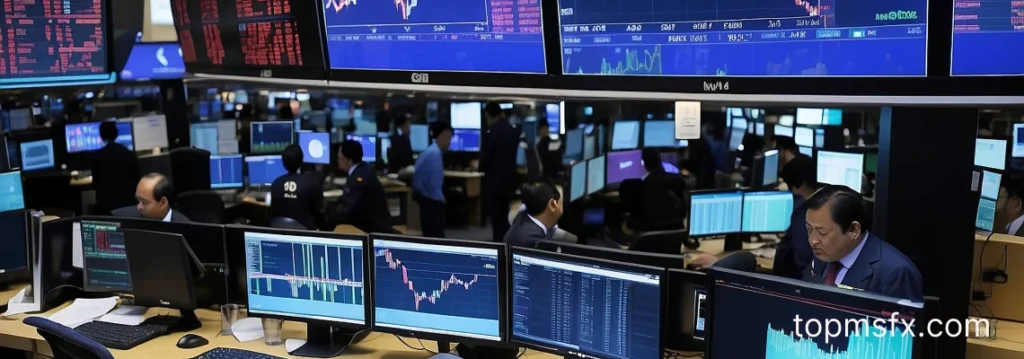
Forex vs Stock Markets
The world of finance is full of investment options, but none are more prominent than Forex and stock markets. These two markets can provide ways to make a profit at some point, but they target different types of investors and operate under different conditions. This Forex vs. Stock Markets article discusses the key differences between the two types of markets, citing aspects such as the assets traded, market hours, liquidity, and volatility. For both veteran traders and newbies, knowing the specifics that differentiate Forex vs stock markets is key to making smart investment choices.
Understanding Forex Trading
Definition and Basics
Forex, short for foreign exchange, is a dynamic global marketplace where currencies are traded. Currencies exchange by trillions of dollars daily, making it the world’s largest financial market connecting buyers and sellers worldwide. In this bustling market, currencies are traded in pairs e.g., euro against dollar (EUR/USD). The goal is to profit from fluctuations in their exchange rates.
Market Hours and Liquidity
The forex market has always been open for trading at any time because it works 24 hours a day, five days a week. This also makes trading opportunities available all the time. However, liquidity varies during different periods depending on when most traders are participating. The biggest trading sessions usually take place in London, New York City and Tokyo where there is more liquidity than normal with minimum spreads.
Factors Influencing Forex Markets
- Economic indicators. Macroeconomic indicators are what forex traders cannot do without. They include inflation rates, Gross Domestic Product (GDP) and employment figures that show how well an economy is performing. A strong GDP growth rate for instance may indicate a robust economy and this can increase the value of that country’s currency. However, inflation has mixed effects; it may reduce purchasing power thereby leading to currency depreciation but may also prompt central banks to raise interest rates which could lift the currency.
- Political events. The forex market can be potently shaken by unpredictable political events. For instance, elections or government policies have an impact on international relations among other things. For example during an election uncertainty or policy change creates volatility as traders react with the expected economic outcomes in mind. An example of this is the Brexit referendum that led to significant movements in British pounds due to worries about the UK’s economic future.
- Central bank policies. In the currency markets, central banks such as the US Federal Reserve or the EU Central Bank have a significant influence. Their interest rates and monetary policy decisions can either strengthen or weaken their currencies respectively. To illustrate, when a central bank raises interest rates, it usually makes that currency attractive to investors so that its value increases relative to other currencies. On the other hand, if they lower rates, a depreciation of the currency can be caused as investors look elsewhere for better returns on their investments.

Pros of Forex Trading
High Liquidity
Of all the financial markets in the world today, the forex market remains the most liquid and largest market, with trillions exchanged daily. This high liquidity ensures that even large currency orders are executed immediately and accurately, thereby minimizing the chances of price manipulation. Consequently, tighter spreads provide traders with better prices, which is important when it comes to executing trades without significant price deviations.
24/5 Market Accessibility
One of the features that sets Forex trading apart from other forms of trading is its ease of access. This means that traders have their own time schedules in which to engage in this global trade; as such, it operates 24/5. This makes it particularly useful for people who work full-time or have other commitments, as they can buy or sell currencies before and after regular working hours, respectively. The continuous operation across time zones around the world also allows traders to quickly react to emerging news articles that cause price changes on a global level.
Leverage Opportunities
Forex trading offers significant leverage opportunities, sometimes as high as 50:1, allowing traders to manage large positions with small amounts of money. This increases the chances of making a larger profit, making it attractive to people who want to increase their income through this method of investing. However, unwise use of leverage can lead to large losses, so caution is advised.
Cons of Forex Trading
High Volatility
Volatility is varied, but sometimes it can hide many significant risks. The forex market is known for its rapid price fluctuations, which are unpredictable and are usually caused by factors such as political events that provoke mixed market sentiment or macroeconomic factors. For traders, this means that the situation can change in a flash – both positively and negatively. Thus, without a reliable risk management strategy, high volatility leads to big losses.
Risk of Leverage
Leverage can be a powerful tool in forex trading, but that same leverage can magnify profits, or it can magnify losses. If not managed carefully, a small adverse movement in currency prices can wipe out an entire trading account. Therefore, traders must understand how leverage works and use it wisely to avoid catastrophic losses.
Complex Market Influences
The Forex market is affected by numerous factors such as the global economy, politics, and central bank policies. Unlike stock trading, where an earnings report can drive the price movement of a company’s shares, Forex traders have to navigate a more complex landscape. Constant awareness and adaptability make this a demanding and challenging business for most people.
Understanding Stock Trading
Definition and Basics
In stock trading, the basic concept is to buy and sell shares of public companies. These transactions take place within a larger network, otherwise known as the stock market, which is vast. An electronic trading platform facilitates these exchanges, which take place between investors, from experts to individuals managing their own investment portfolios. For businesses, the stock market is very important because it allows them to raise funds by selling a part of themselves to the public, allowing investors to accumulate wealth.
Market Hours and Structure
In general, stock trading does not occur around the clock, although major exchanges such as the NYSE or NASDAQ are only open during certain hours, namely from 9:30 AM to 4:00 PM ET on weekdays. This means that trading hours are very important, as this is when most securities transactions take place. There are layers to this market structure, with the NYSE being the primary market for publicly traded companies, while the OTC markets cater to smaller, illiquid stocks outside of these well-known exchanges. For traders to understand everything about trading, they need to understand this arrangement, as it affects everything, including liquidity and the availability of information related to individual stocks.
Factors Influencing Stock Markets
It’s not the companies themselves, but the forces of supply and demand that determine stock prices, which are driven by a variety of factors:
- Company performance. The most immediate impact on a stock’s price is how well a company is doing. Strong earnings reports, innovative products, or successful market expansions can drive stock prices higher. Conversely, poor results, scandals, or management problems can drive stock prices lower.
- Economic conditions. Broader economic trends also play a significant role. Inflation, unemployment, and interest rate changes can all affect investor confidence. For example, a booming economy can boost stock prices as consumer spending increases, while a recession can cause a market downturn.
- Market sentiment. Sometimes it’s not about the numbers, it’s about the sentiment. Market sentiment reflects the collective emotions of investors, whether they are optimistic (bullish) or pessimistic (bearish). This sentiment can be driven by anything from geopolitical events to social media trends.
Pros of Stock Trading
Ownership and Dividends
Buying stocks means buying a piece of that company. Shareholder payouts can come in the form of dividends; and periodic payments to shareholders that generate ongoing cash flows.
Analyst Coverage
Various large companies are covered by financial forecasters. Their reports can be a treasure trove for investors, helping them decide on the best options.
Diverse Investment Options
The stock market offers so many options to choose from, from huge companies like Apple to smaller and potentially fast-growing organizations, it allows any investor to determine how much they can afford based on their chosen risk profile.
Cons of Stock Trading
Market Hours Limitations
For each currency pair, the foreign exchange market is open 24 hours a day during the working week, while stock trading is only available for fixed periods. This can be a limitation. For example, if you are trying to stay up to date with what is happening after business hours.
Lower Leverage Compared to Forex
The amounts that people can borrow for their investments are generally lower compared to forex trading, so it is easy to make big profits but smaller losses when trading in the stock market.
Potential for Lower Liquidity in Small Cap Stocks
Although large-cap stocks usually have high liquidity, which facilitates quick buy or sell transactions, traders may find it more difficult to trade small-cap stocks due to poor market liquidity. Such situations can cause price fluctuations and make it difficult to buy or sell stocks at certain prices.
Forex trading vs Stock trading
The table below outlines Stock market vs Forex market differences and provides a visual comparison of their key characteristics.
Feature | Stock Market | Forex Market |
Traded assets | Shares of companies, ETFs, REITs, bonds | Currency pairs (e.g., EUR/USD, GBP/JPY) |
Market hours | Typically 9:30 AM to 4:00 PM EST (varies by exchange) | 24 hours a day, 5 days a week (overlapping global sessions) |
Liquidity | High for large-cap stocks, lower for small-cap stocks | Extremely high for major currency pairs |
Leverage | Generally lower (2:1 to 5:1) | Higher leverage (can exceed 100:1) |
Market participants | Institutional investors, retail investors, traders | Central banks, financial institutions, corporations, retail traders |
Volatility | Varies; can be high during earnings reports or economic news | High, influenced by geopolitical events, economic data, etc. |
Accessibility | Accessible to retail investors, but with potential barriers | Highly accessible with low entry barriers |
The comparison of stock trading vs forex trading highlights distinct advantages and challenges within each market. Stock trading involves investing in company shares with a focus on long-term growth, while forex trading centers on currency pairs with higher liquidity and volatility. Understanding these key differences in stock vs forex can help investors choose the market that aligns best with their financial goals and risk tolerance.
FAQ
Forex trading involves buying and selling currency pairs, with traders speculating on exchange rate fluctuations, often in a highly liquid and volatile market. The stock market, on the other hand, involves buying shares of individual companies, with investors seeking to profit from the company’s growth and dividends over time.
Both forex and stock market trading carry risks, but forex is often considered riskier due to its high leverage, 24-hour market, and significant volatility. Stock market trading can also be volatile, especially for individual stocks.
Stocks are generally better for long-term investments because of their growth potential and dividends over time. Forex trading is more volatile and is often preferred for short-term strategies because currencies tend to fluctuate more frequently and sharply in value.